Temples of the Himalayas
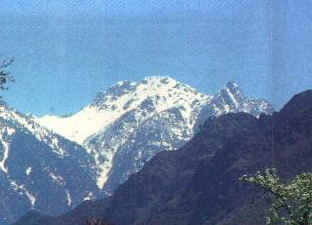
Description: The towering 22028 ft
high peak Mt. Kailash in the Himalayas, 25 miles north of the Mansarovar lake is hailed as
the abode of Shiva. It is an arduous trek to Kailash through the snow clad Himalayas and
is attempted only by a few. The Tibetians refer to Kailash as Kangrimpoche (Jewel of
Snow). Kailash is also referred to as Hemakootam. This is one of the 4
Tevarastalams in the
Himalayas the other three being Gowrikund, Kedarnath and Indraneela
Parvatam. Major rivers have their source around the Manasarovar lake and
Kailash.
Route to Kailash: Pilgrims go to Kailash via the Lipu Lekh pass. They
first go to Tonakpur, then through Pithorgarh, Askot and Dharchula and Garbiang the last
town in Indian territory. The Lipu Lekh pass is 16750 feet above sea level, and is at the
Tibet frontier. Pilgrims then reach Taklakot, a Budhist center. Manasoravar is 34 miles
away from here. 12 miles from Taklakot in Bhutan, is Kocharnath. An alternate route to
Mansarovar is via Kathgodam, Karpot, Milon, Tirthapuri and Kailash. Yet another route is
from Haridwar via the Niti pass.
The Mansarovar lake is known as Cho Mapan. There are two lakes here; one the rakshasa
tal, where Ravana performed penances towards Shiva, and the other the Mansarovar,
considered to be one of the 51 Sakth Peethams.
Mount Kailash is located 20 miles from Mansarovar; it appears like a giant Shivalingam
placed in a 16 petaled lotus. Pilgrims first reach Darchin, and then start their 32 mile
pradakshina or circumambulation around the sacred mountain. From Darchin, they proceed to
Landifu, then Derfu, and then in a north east direction to Gowrikund 19000 feet above sea
level. Gowri Kund in Tibet is known as Thuki Singbu. Then they go to Jandalfu and
come back to Darchin. There are several Buddhist temples in this area.
The Nayanmars: Tirunavukkarasar on his way to Kailasam is said to have
been transported by divine intervention to Tiruvaiyaru
- Dakshina Kailasam. Karaikkal Ammaiyar is said to have trekked to Kailasam and returned
to Tiruvalangadu. Sundaramoorthy Nayanar is said
to have travelled to Kailasam on a white elephant, while his contemporary Cheraman Perumal
Nayanar of Tiruvanjaikkalam composed
Tirukkayilaya Gnana Ula at Mt. Kailash. Sambandar sang praises of Kailasam from Sree Kalahasti.
Kailash is the fifth of the Tevara Stalams hailed by the Tamil hymns of
the Nayanmars, located outside of Tamilnadu/Kerala/Karnataka i.e. in
Vada Naadu (the northern lands).
Mt. Kailash is regarded by Hindus as an embodiment of Shiva and Parvati. The Buddhists
refer to the sacred mountain as Kangri Karchchak; they regard the presiding deity of Mt.
Kailash as Deity with three eyes, holding the damaru and the trishul; his consort is
referred to as Dorje Fangmo. The Jains regard Mt. Kailash as the Ashtapada mountain where
the first Tirtankara Adinath (Rishabhadeva) attained nirvana. |